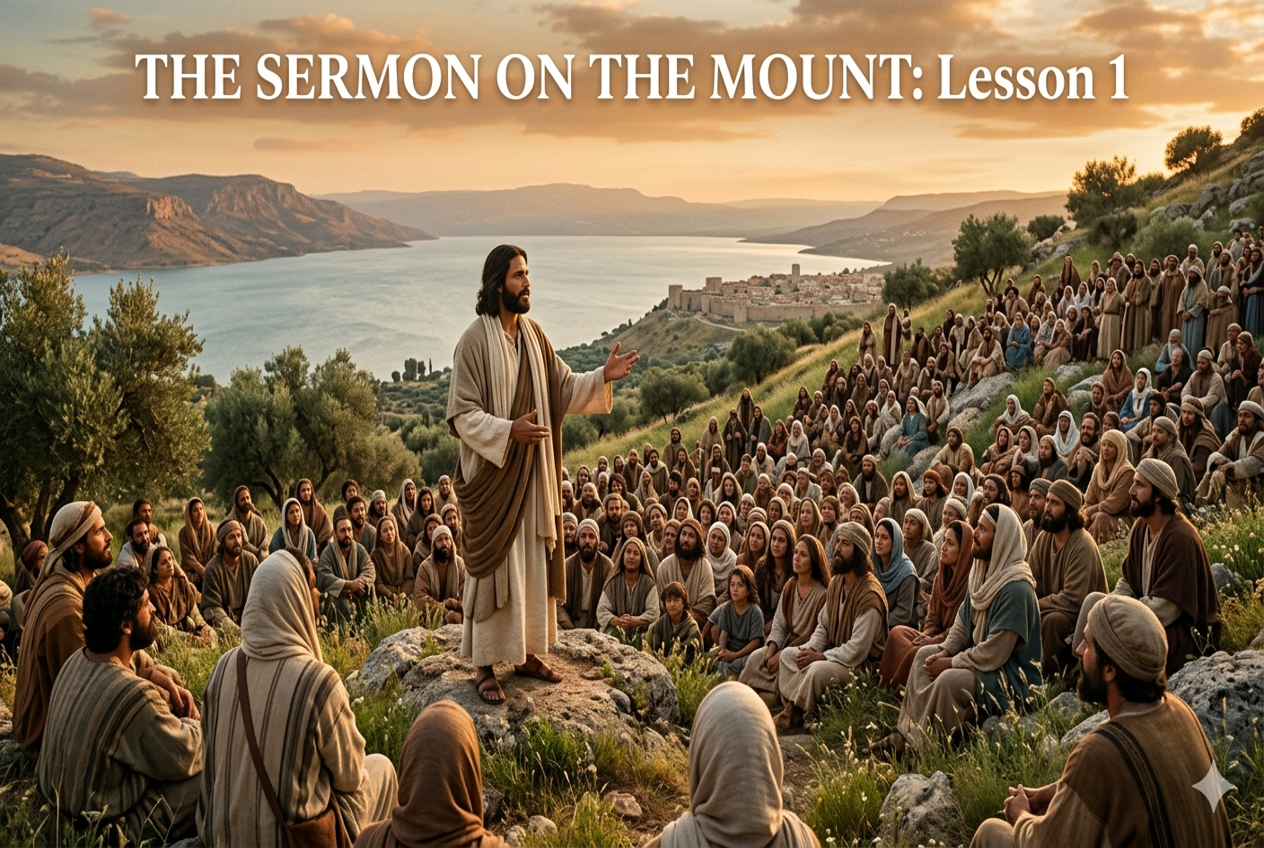
The Beatitudes: An expansive exegetical Scriptural Analysis on the Beatitudes as a Declaration of War

“Blessed are the poor in spirit, For theirs is the kingdom of heaven. Blessed are those who mourn, For they shall be comforted. Blessed are the meek, For they shall inherit the earth. Blessed are those who hunger and thirst for righteousness, For they shall be filled. Blessed are the merciful, For they shall obtain mercy. Blessed are the pure in heart, For they shall see God. Blessed are the peacemakers, For they shall be called sons of God. Blessed are those who are persecuted for righteousness’ sake, For theirs is the kingdom of heaven. “Blessed are you when they revile and persecute you, and say all kinds of evil against you falsely for My sake. Rejoice and be exceedingly glad, for great is your reward in heaven, for so they persecuted the prophets who were before you.
MATTHEW 5: 3-12

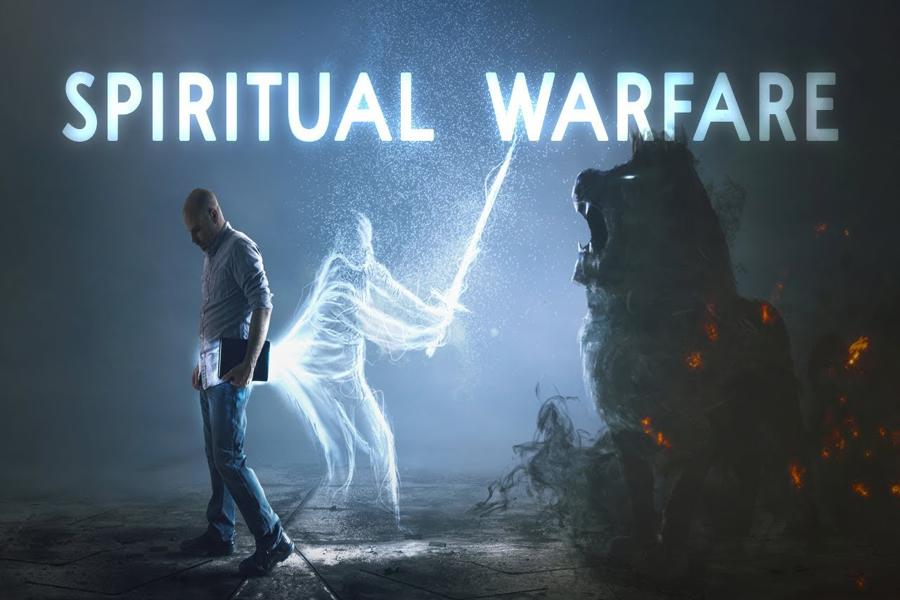
This expansive exegesis explores the Beatitudes not as a list of moral platitudes, but as a Declaration of War against the values of the fallen world. In the original First-Century context, Jesus’ words were explosive—a “Magna Carta” of an upside-down Kingdom that systematically dismantles the “principalities and powers” of human pride and self-sufficiency.
I. The Philological Foundation: The State of Makarios
To grasp the depth of these verses, one must first penetrate the word μακάριος (makarios). In classical Greek literature, notably in Homer, makarios was used exclusively to describe the “state of the gods.” It referred to a joy that was αὐτάρκης (autarkēs)—self-contained, independent of earthly “hap” (chance), and utterly untouchable by the tragedies of the mortal realm.
Deep Revelation: When Jesus utilizes this term, He is performing a linguistic “hostile takeover.” He is asserting that a human being, through the indwelling of the Spirit, can participate in the divine contentment of God Himself. This is the ultimate spiritual warfare tactic: possessing a joy so deeply rooted in the “Third Heaven” that no demon or earthly circumstance can reach its taproot.
II. The First Gateway: Ptōchos tō Pneumati (The Poor in Spirit)
“Blessed are the poor in spirit, for theirs is the kingdom of heaven.” (Matt 5:3)
1. The Beggar’s Posture
Jesus distinguishes between two types of poverty. He avoids the word penēs (the working poor who struggle to make ends meet) and chooses πτωχός (ptōchos). This word originates from the verb ptōssō, meaning “to crouch” or “to cower.” It describes a destitute beggar who has nothing, can do nothing, and is totally dependent on the mercy of another.
2. Theological Depth & Warfare
The Radical Reversal: In the Roman world, virtus (manly strength) was the currency of power. Jesus declares that the currency of His Kingdom is acknowledged bankruptcy.
Warfare Connection: The enemy’s first fortress is the “stronghold of self-sufficiency.” By becoming ptōchos, the believer “de-platforms” the enemy. If you have nothing to protect and no ego to defend, the enemy has no leverage. The “Kingdom of Heaven” is given in the present tense (estin—”is theirs”) because the moment you surrender your “assets,” you inherit the King’s.
III. The Strength of the Broken: (Penthountes) (Those Who Mourn)
“Blessed are those who mourn, for they shall be comforted.” (Matt 5:4)
1. The Greek Intensity
The word πενθοῦντες (penthountes) is the most agonizing word for grief in the Greek language. It is the grief of Jacob for Joseph; it is a sorrow that consumes the entire being.
2. The Cultural and Spiritual Shift
Theological Depth: This is not mere “sadness.” It is the mourning of the Watchman. It is the sorrow of 2 Corinthians 7:10—a godly sorrow over one’s own (hamartia) (sin) and the systemic brokenness of a world under the “god of this age.”
Warfare Connection: The “Comfort” (παρακαλέω, parakaleō) is a military term. It means “to call to one’s side.” The Holy Spirit (the Paraclete) does not just offer sympathy; He offers reinforcements. In spiritual warfare, mourning is the “distress signal” that brings the King’s personal guard to your aid.
IV. Power Under Restraint: (Praeis) (The Meek)
“Blessed are the meek, for they shall inherit the earth.” (Matt 5:5)
1. The War-Horse Metaphor
In 1st-Century Greek, πραΰς (praus) was used by Xenophon to describe a powerful stallion that had been “broken” or trained for battle. It possessed the same muscular power and fire as a wild horse, but its will was now perfectly synchronized with the rider’s touch.
2. The Theological Depth
Inheritance vs. Conquest: The world “conquers” the earth through (bia) (violence). The Kingdom “inherits” the earth through (praus).
Warfare Connection: Meekness is not weakness; it is Precision Power. It is the ability to suffer wrong without retaliating in the flesh, which confuses and disarms the enemy. The meek warrior is the most dangerous because they are no longer “reacting” to the enemy; they are only “responding” to the King.
V. The Desperate Appetite: (Dikaiosunē) (Righteousness)
“Blessed are those who hunger and thirst for righteousness, for they shall be satisfied.” (Matt 5:6)
1. The Survivalist’s Craving
In the arid climate of the Ancient Near East, hunger and thirst were not metaphors for “preference”; they were life-threatening crises. Jesus uses the present participle, indicating a continuous, agonizing craving for (δικαιοσύνη) (dikaiosunē)—divine justice and right-standing.
2. The Revelation of (Chortasthēsontai)
Theological Depth: The promise of being “filled” uses the word (χορτάζω) (chortazō), originally used for foddering animals until they were completely gorged and satisfied.
Warfare Connection: A “full” soldier is a focused soldier. The enemy uses “spiritual malnutrition” (distractions, worldly lusts) to weaken the saint. When you are “gorged” on the righteousness of God, the “bait” of the enemy loses its appeal. You cannot be tempted by the “bread of sorrows” when you are filled with the “Bread of Life.”
VI. The Strategy of Internalization: (Katharoi tē Kardia) (Pure in Heart)
“Blessed are the pure in heart, for they shall see God.” (Matt 5:8)
1. The Sifted Heart
The word (καθαρός) (katharos) means “unadulterated,” like wine without water or metal without dross. The (Kardia) (heart) was the “command center” of the human being—the seat of the will.
2. Theological Depth: Single-Mindedness
The Vision of God: To “see” God (ὄψονται, opsontai) implies a future certainty and a present intimacy.
Warfare Connection: The enemy’s primary tactic is double-mindedness (James 1:8). He wants to divide your allegiances. Purity of heart is “to will one thing.” This single-minded focus acts as a “spiritual laser,” cutting through the fog of demonic deception to see the King’s orders clearly.
VII. The Proactive Peace: (Eirēnopoiioi) (The Peacemakers)
“Blessed are the peacemakers, for they shall be called sons of God.” (Matt 5:9)
1. Shalom as Wholeness
The Greek εἰρηνοποιοί (eirēnopoiioi) stems from the Hebrew Shalom. It is not a passive “peace-lover” but an active “peace-maker” who steps into chaos to restore order.
2. The DNA of the Son
Theological Depth: They will be “called sons” (υἱοὶ, huioi). In Hebrew culture, the “son of” someone was someone who displayed the character of their father.
Warfare Connection: This is “Offensive Reconciliation.” The enemy is the “Accuser” and the “Divider.” When you step into a conflict to bring the peace of Christ, you are directly dismantling the works of the devil. You are identified as a “Son” because you are doing exactly what the Firstborn Son did on the Cross.
VIII. The Ultimate Validation: (Diōkō) (The Persecuted)
“Blessed are those who are persecuted for righteousness’ sake…” (Matt 5:10-12)
1. The Legal Validation
The word for “persecuted” is διώκω (diōkō), which means “to be pursued” or “hunted.” Jesus moves from the third person (“they”) to the second person (“you”), making the call personal.
2. The Theology of Rejoicing
The Command: “Rejoice” (χαίρετε, chairete) and “be glad” (ἀγαλλιᾶσθε, agalliasthe—to leap for joy). This is the only Beatitude that requires a physical response of celebration.
Warfare Connection: Persecution is the enemy’s “white flag.” It is his admission that your life has become a threat to his kingdom. By rejoicing in the midst of it, you perform the ultimate “spiritual flex”—showing the principalities that their greatest weapon (pain/death) has lost its power over you.
Conclusion: The King’s Portrait
The Beatitudes are not a “to-do” list; they are a Portrait of the King. Jesus was the Ptōchos who left heaven; the Penthountes who wept over Jerusalem; the Praus who did not open His mouth; the Eirēnopoiioi who shed His blood.
When you embody these, you are not just being “good”; you are wearing the image of Christ as a tactical garment, becoming a living invasion of the Kingdom of Heaven on earth.
“Blessed are the poor in spirit, For theirs is the kingdom of heaven. Blessed are those who mourn, For they shall be comforted. Blessed are the meek, For they shall inherit the earth. Blessed are those who hunger and thirst for righteousness, For they shall be filled. Blessed are the merciful, For they shall obtain mercy. Blessed are the pure in heart, For they shall see God. Blessed are the peacemakers, For they shall be called sons of God. Blessed are those who are persecuted for righteousness’ sake, For theirs is the kingdom of heaven. “Blessed are you when they revile and persecute you, and say all kinds of evil against you falsely for My sake. Rejoice and be exceedingly glad, for great is your reward in heaven, for so they persecuted the prophets who were before you.
MATTHEW 5: 3-12