A Man Without Self-Control Is Like a City Broken Into and Left Without Walls” (Proverbs 25:28): A Deep Theological and Exegetical Exploration

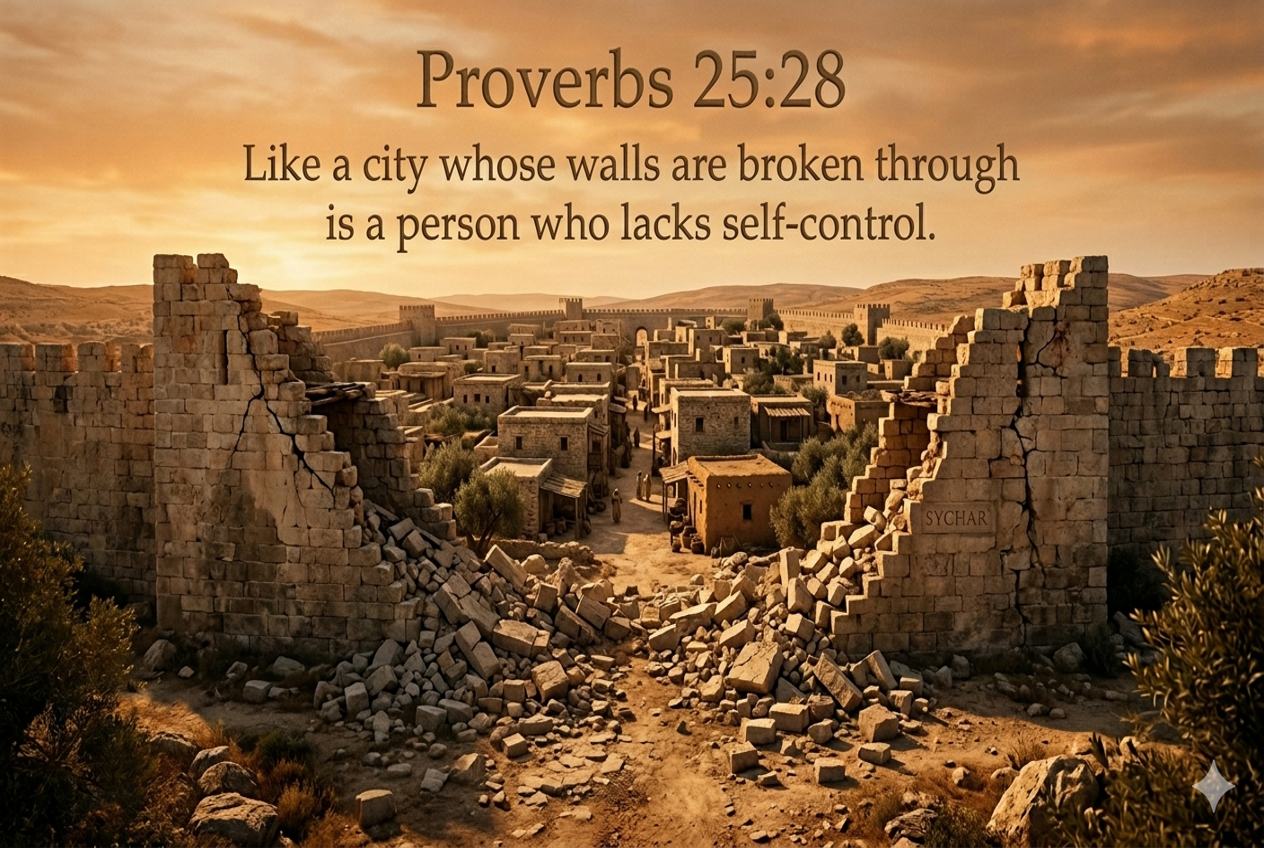
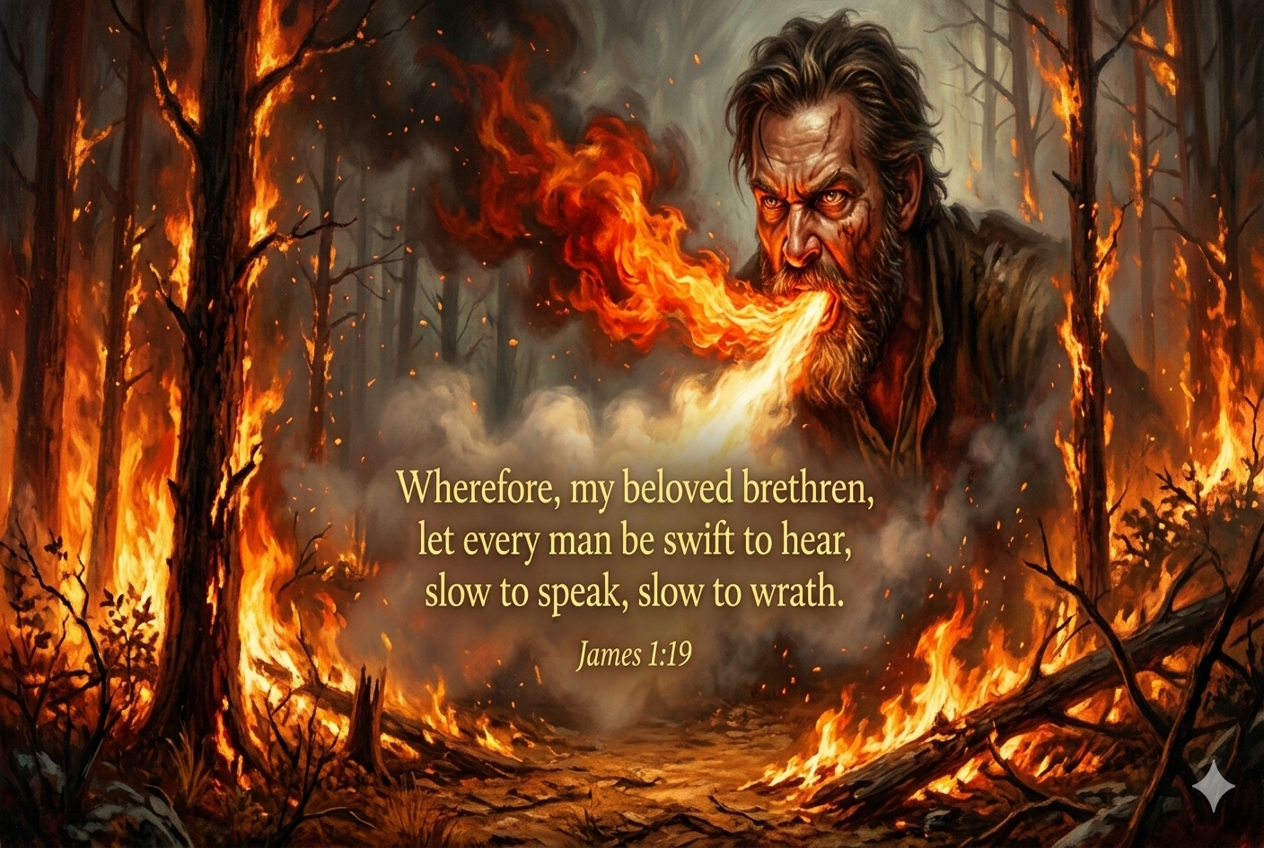
Like a city whose walls are broken down is a man who does not control his temper/lacks self-control.
PROVERBS 25:28

Proverbs 25:28 presents a metaphor of striking force and enduring relevance:
“A man without self-control is like a city broken into and left without walls.” At first glance, the imagery is simple; yet beneath its surface lies a profound theological anthropology, a doctrine of sin, and a call to Spirit-empowered holiness. To fully appreciate the depth of this proverb, one must examine its original language, canonical context, and theological implications in light of the whole counsel of Scripture.
The Hebrew text reads: ‘עִיר פְּרוּצָה אֵין חוֹמָה, אִישׁ אֲשֶׁר אֵין מַעְצָר לְרוּחוֹ’ (ʿîr perûṣāh ʾên ḥômāh, ʾîš ʾăšer ʾên maʿṣār lĕrûḥô). Literally translated, it says: “A city breached, without a wall—so is a man who has no restraint for his spirit.” Several key terms demand closer attention.
The phrase ʿîr perûṣāh (“a city broken into” or “breached city”) derives from the root pāraṣ, meaning “to break through,” “to burst forth,” or “to make a gap.” This term is often used in military contexts to describe the violent penetration of defenses (cf. 2 Samuel 5:20). It conveys not merely neglect, but active destruction—suggesting that the city has already suffered invasion. The following phrase, ʾên ḥômāh (“without a wall”), intensifies the image: the city is now permanently exposed, stripped of its primary means of protection.
The second half of the verse introduces the subject: ʾîš ʾăšer ʾên maʿṣār lĕrûḥô—“a man who has no restraint over his spirit.” The word maʿṣār comes from the root ʿāṣar, meaning “to restrain,” “to hold back,” or “to shut in.” It implies the ability to govern or limit something that would otherwise overflow. The term rûaḥ (“spirit”) is multifaceted, encompassing breath, wind, inner disposition, emotions, and will. In this context, it refers to the internal life of a person—the seat of desires, impulses, and reactions. Thus, the proverb describes a person who lacks the capacity to regulate their inner drives, leaving them vulnerable to external and internal chaos.
In the ancient Near Eastern world, city walls were indispensable. They provided defense against enemies, delineated identity, and ensured social order. Archaeological evidence from cities like Jericho and Jerusalem reveals massive fortifications, often several meters thick. To be without walls was not merely inconvenient; it was catastrophic. A breached city invited plunder, violence, and eventual annihilation. This cultural backdrop sharpens the proverb’s warning: a life without self-control is not simply disordered—it is defenseless and doomed to collapse.
This imagery resonates with the broader biblical theme of guarding one’s inner life. Proverbs 4:23 exhorts: “Keep your heart with all vigilance, for from it flow the springs of life.” The Hebrew verb nāṣar (“keep” or “guard”) is a military term, suggesting watchfulness against intrusion. Just as a city must guard its gates, so must a person guard their heart. Without such vigilance, destructive forces—whether sinful desires or external temptations—gain access.
The New Testament deepens this concept through the doctrine of the flesh (sarx) and the Spirit (pneuma). In Galatians 5:22–23, self-control (enkrateia) is listed as the final fruit of the Spirit. The Greek term enkrateia combines en (“in”) and kratos (“power” or “strength”), denoting mastery from within. It is not mere repression, but Spirit-enabled dominion over one’s desires. This stands in contrast to the works of the flesh, which include outbursts of anger, sexual immorality, and drunkenness—all manifestations of a life without restraint.
The apostle Paul further elaborates this theme in 1 Corinthians 9:25–27, where he compares the Christian life to athletic training: “Every athlete exercises self-control in all things.” The verb enkrateuomai emphasizes disciplined effort directed toward a higher goal. Paul even speaks of “disciplining” his body (hypōpiazō, literally “to strike under the eye”), underscoring the intensity required to maintain spiritual integrity. This aligns with Proverbs 25:28: without such discipline, one becomes spiritually exposed.
The metaphor of breached walls also finds resonance in narratives of moral failure. Consider the life of Samson (Judges 13–16). Though endowed with divine strength, Samson lacked self-control, particularly in matters of desire. His repeated surrender to temptation—culminating in his betrayal to Delilah—illustrates the progressive erosion of inner defenses. Like a city gradually breached, Samson’s life was opened to destruction, leading to his downfall. His story embodies the truth of Proverbs 25:28 in narrative form.
Similarly, the account of Cain in Genesis 4 offers a theological parallel. God warns Cain: “Sin is crouching at the door. Its desire is for you, but you must rule over it.” The imagery of sin “crouching” (rōbēṣ) evokes a predator waiting to invade. The command to “rule” (māšal) implies the necessity of self-control. Cain’s failure to master his anger results in the first murder, demonstrating how unchecked impulses lead to catastrophic consequences.
Conversely, Scripture presents positive examples of self-control as evidence of wisdom and divine favor. Joseph, in Genesis 39, resists the advances of Potiphar’s wife, declaring, “How then can I do this great wickedness and sin against God?” His restraint is not merely moral but theological—it flows from his awareness of God’s presence. Joseph’s “walls” remain intact because his inner life is governed by reverence for God.
Theologically, the absence of self-control can be understood within the framework of original sin. Humanity, created in the image of God, was designed for ordered desire and harmonious self-governance. However, the Fall introduced disordered affections, as described by Augustine as concupiscentia—a misdirected love. Thus, the natural human condition is one of internal fragmentation, where desires conflict and overwhelm reason. Proverbs 25:28 captures this fallen state: without divine intervention, the human “city” remains breached.
Yet, the gospel offers restoration. Through union with Christ, believers receive not only forgiveness but transformation. Titus 2:11–12 declares that the grace of God “trains us to renounce ungodliness and worldly passions, and to live self-controlled (sōphronōs), upright, and godly lives.” The term sōphronōs conveys soundness of mind and disciplined living, indicating that self-control is both a gift and a learned practice.
Moreover, the imagery of walls is redeemed in eschatological vision. In Revelation 21, the New Jerusalem is described as having “a great, high wall,” symbolizing perfect security and divine order. Unlike the breached city of Proverbs 25:28, this city is eternally protected, its gates never shut. This contrast highlights the ultimate hope of restoration: what is now fragile and vulnerable will one day be made whole and secure in God’s presence.
In practical terms, the proverb calls for a life of intentional discipline rooted in dependence on God. Spiritual practices such as prayer, meditation on Scripture, and accountability serve as means of reinforcing one’s “walls.” Yet, these are not ends in themselves; they are conduits of divine grace. True self-control emerges not from self-reliance but from surrender to the Spirit, who orders the believer’s desires according to God’s will.
In conclusion, Proverbs 25:28 offers a richly layered metaphor that speaks to the core of human existence. Through its vivid imagery of a breached and defenseless city, it reveals the peril of a life without self-control—a life exposed to sin, chaos, and destruction. By examining its original language, canonical connections, and theological implications, we see that self-control is not merely a moral virtue but a spiritual necessity, rooted in God’s design and fulfilled through His grace. As believers seek to live wisely in a fallen world, this proverb stands as both a warning and an invitation: to rebuild the walls of the soul through the power of the Spirit, and to dwell securely under the governance/rule of God.